

Zhengen Power|Complete Analysis of 3D Printed Sand Casting
Efficient and Flexible Customization, Unlocking a New Paradigm in Intelligent Casting
For customized needs such as small-batch trial production, complex structural casting development, and rapid verification of new products, Zhengen Power relies on advanced additive manufacturing technology to create an integrated 3D printed sand casting solution. Leveraging technical advantages such as moldless forming, fast delivery, high-flexibility customization, and design freedom, it reconstructs the casting production process and provides equipment manufacturing enterprises with a new pathway for casting development.
Compared with traditional mold casting processes, 3D printed sand casting eliminates the traditional wood and metal mold manufacturing steps, directly forming sand molds through digital printing, fundamentally solving the bottlenecks in traditional casting development. It retains the advantages of traditional sand casting materials such as wide material compatibility and stable mold formation while integrating the efficiency, flexibility, and freedom characteristics of additive manufacturing. This makes it the preferred process for new product development, small-batch customization, and mass production of complex and irregular castings.
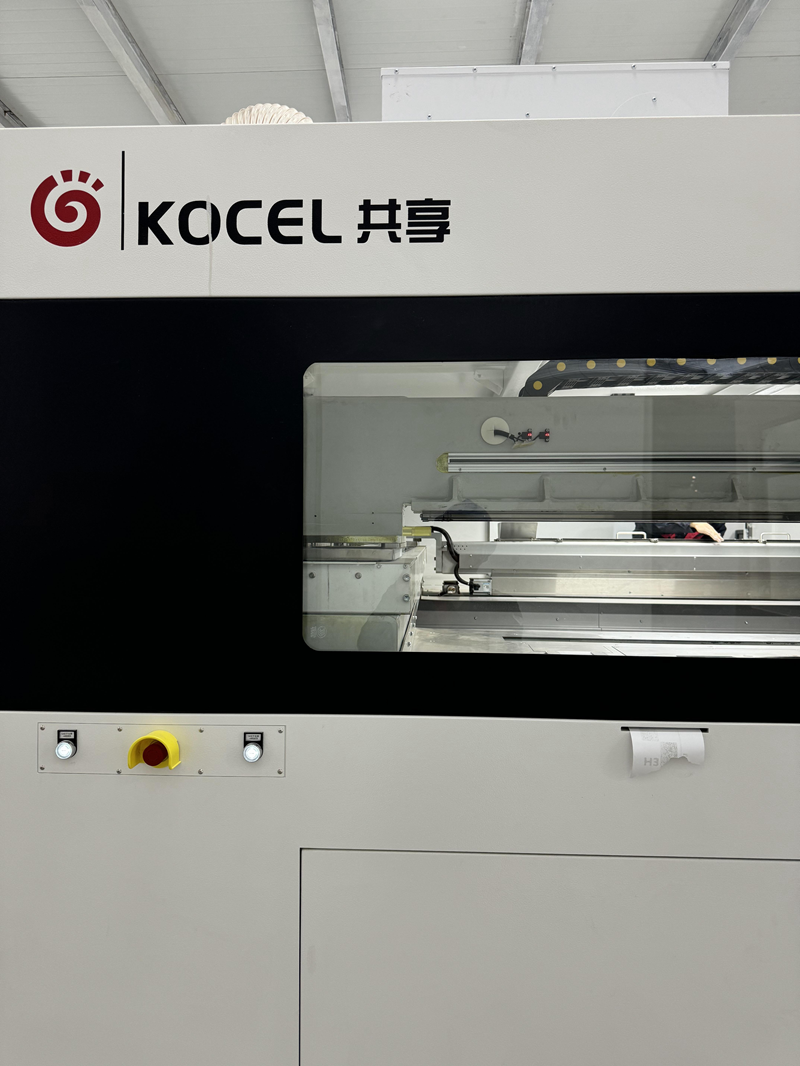
The layer-by-layer 3D printing forming process allows sand mold production to completely break free from traditional mold structure constraints, accurately reproducing structures that are difficult to form in traditional casting, such as complex cavities, winding channels, thin-walled deep cavities, and multi-surfaced irregular shapes.
The process supports flexible iterative optimization. Product structural adjustments do not require remolding, only updating the 3D model is needed to directly print a new sand mold, quickly completing design iterations. It has a wide material adaptation range, capable of stably forming castings from cast iron, cast steel, aluminum alloys, high-temperature alloys, and other metal materials, accurately reproducing the customer’s original design, truly achieving integrated design implementation.
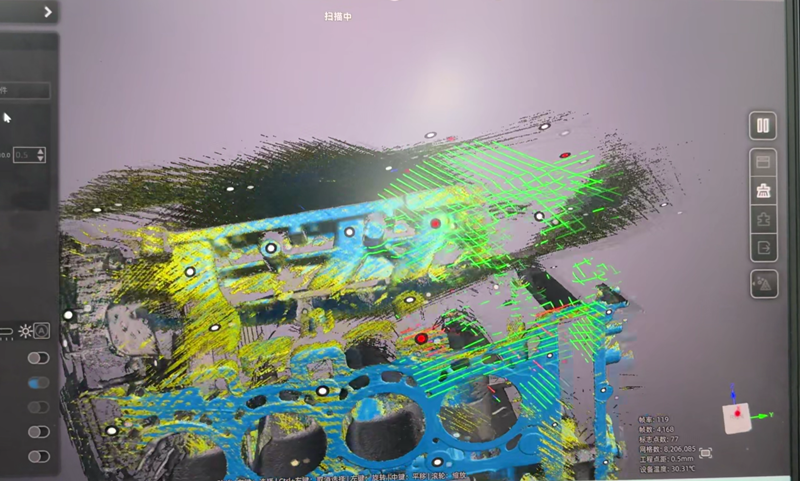
Traditional casting is limited by factors such as draft angle, parting surface, and mold structure, preventing many innovative designs from being realized and often requiring compromises and simplifications. 3D printed sand casting breaks through these traditional process constraints: there is no need to consider draft or parting limitations, supporting integrated whole casting formation, reducing subsequent assembly and welding processing steps, and effectively improving the overall structural strength and dimensional accuracy of castings.
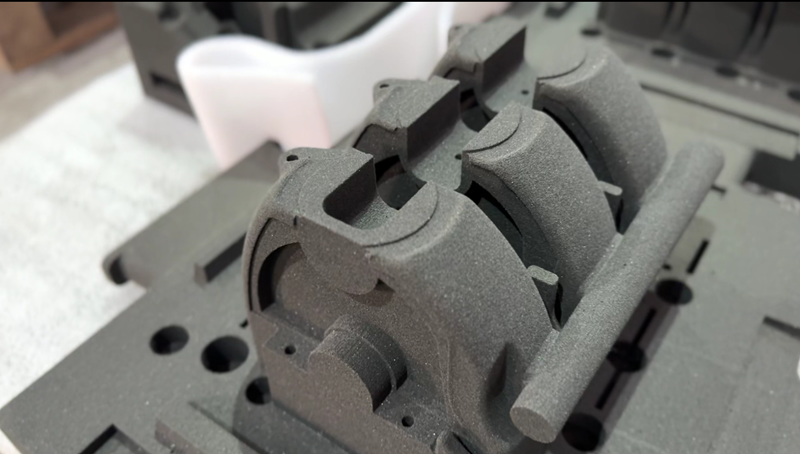
Relying on a mature process system and full-process quality control, Zhengen Power’s 3D printed sand casting solution has been widely applied in various industrial manufacturing fields, suitable for customized production of all manners of core components. Zhengen Power integrates capabilities across technology R&D, digital printing, melting and pouring, and precision post-processing, providing customers with one-stop 3D printed sand casting customization services covering the full process, including 3D model optimization, casting process simulation, sand mold printing, metal pouring, rough machining, and dimensional inspection.
Faced with the demands of rapid new product iteration, small-batch flexible production, and complex structural casting development, 3D printed sand casting has become the core process for upgrading industrial casting. Zhengen Power, based on digital additive casting technology, combines the advantages of traditional sand casting materials with the efficiency and flexibility of 3D printing, solving the three major pain points of traditional casting—cycle time, cost, and structural limitations—and provides customers across industries with stable, efficient, and highly flexible casting customization solutions.
Post time: Apr-28-2026