

Zhenheng Power Air Tightness Testing Process: Helium Leak Testing vs. Conventional Air Pressure Testing
As core protective components of the three-electric system, new energy electric control housings require IP67 air tightness as a core quality control standard before factory delivery. Tiny sand holes, pinholes and micro-cracks on welds are prone to form during the production of die-cast aluminum alloy housings, and micro leakage may easily lead to water intrusion and short-circuit failures of electric controls. At present, two mainstream air tightness testing processes are adopted in the industry for electric control housings: conventional pressure air testing and helium mass spectrometer helium leak testing. This article objectively analyzes the differences between the two processes and elaborates on the application advantages of helium leak testing for high-end housings.
## Conventional Air Pressure Testing: Low Cost with Limited Compatibility
Conventional air pressure testing judges sealing performance based on the principle of air inflation, pressure holding and pressure decay. It features low equipment investment and simple operation, and is mostly used for testing ordinary low-pressure housings.
Its prominent process drawbacks are as follows:
It delivers low testing precision and fails to detect micron-scale sand holes and tiny pinholes; its performance is severely interfered by workshop temperature and the multi-cavity water-cooled structure of electric controls, resulting in high false and missed detection rates in mass production. Moreover, it can only determine overall air leakage of workpieces without pinpointing leak points, making it hard to meet mass production IP67 waterproof requirements for new energy electric controls.
## Core Principle of Helium Leak Testing for New Energy Electric Control Housings
Helium has a small molecular weight and extremely strong penetrability, which serves as the foundation of helium leak testing. Helium gas is filled into the inner cavity of the housing, and a vacuum leak detector captures escaped helium molecules to accurately calculate the leakage rate. The testing precision reaches 10⁻¹² Pa·m³/s, with testing sensitivity tens of thousands of times higher than that of conventional air pressure testing.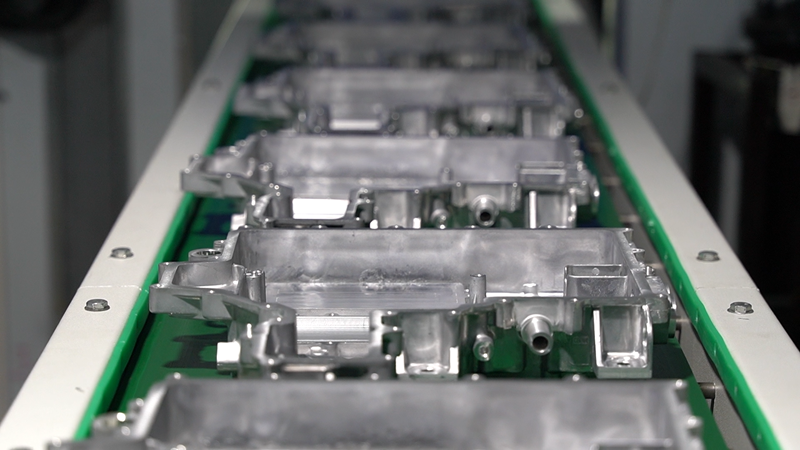
## Core Advantages of Helium Leak Testing for Electric Control Housings
1. Ultra-high precision to meet IP67 protection standards
It fully screens micro leakage defects and is compatible with integrated water-cooled electric control housings, steadily satisfying the IP67 waterproof acceptance criteria for new energy vehicles.
2. Strong anti-interference capacity and stable mass production data
Free from interferences of ambient temperature differences, complex special-shaped cavities and multi-water-channel structures, it generates consistent testing data during mass production and avoids mass false and missed detections.
3. Accurate leak point localization to optimize production processes
It pinpoints leakage positions and corresponding leakage rates, enabling reverse optimization of die-casting and welding procedures to reduce housing die-casting defect rates from the source.
4. Non-destructive testing compatible with aluminum alloy housings
Helium is an inert gas with no residue and no corrosion to aluminum die castings. The testing causes no damage to workpieces, so housings can be directly transferred to subsequent production procedures.
## Helium Leak Testing Process Layout of Zhenheng Power
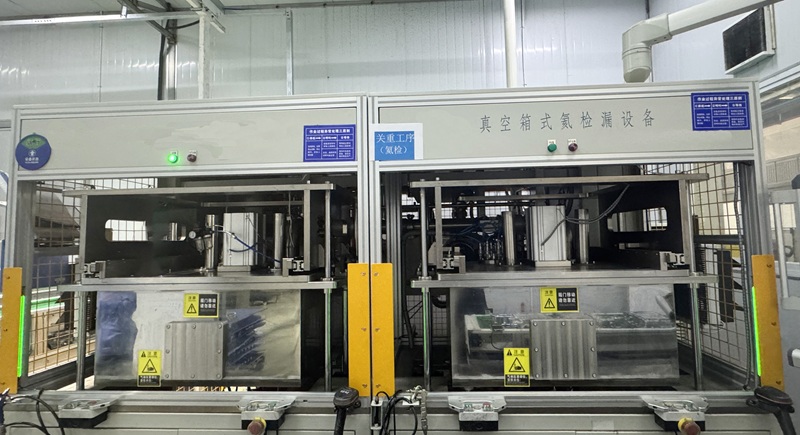
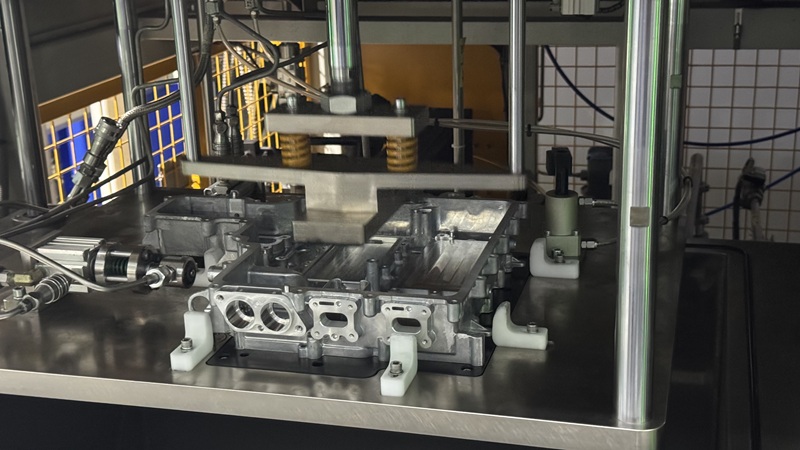
To cater to mass production demands of high-end new energy electric control housings and quality control standards of vehicle OEMs, Zhenheng Power’s production lines are equipped with multiple dedicated helium leak testing devices, implementing full helium inspection for multi-cavity water-cooled electric control housings and products with high sealing requirements.
Thanks to its ultra-high precision and outstanding stability, helium leak testing has become the preferred inspection process for current new energy water-cooled electric control housings and IP67-grade die-cast housings. Supported by a professional helium leak testing quality control system, Zhenheng Power delivers high-quality mass-produced three-electric system housings for new energy vehicles.
Post time: Jun-29-2026