

Zhengheng Power | Air Tightness Quality Control for Aluminum Die-Cast Housings
The electronic control systems of new energy vehicles operate continuously under harsh conditions including constant vibration, high humidity and drastic temperature fluctuations. The sealing and air tightness of aluminum die-cast ECU housings serve as a critical safeguard to stabilize the operation of electronic control modules, extend component service life and avoid after-sales failures of complete vehicles. Full helium leak testing of ECU housings has become a mandatory requirement in the supply chain of high-voltage three-electric die-cast components.
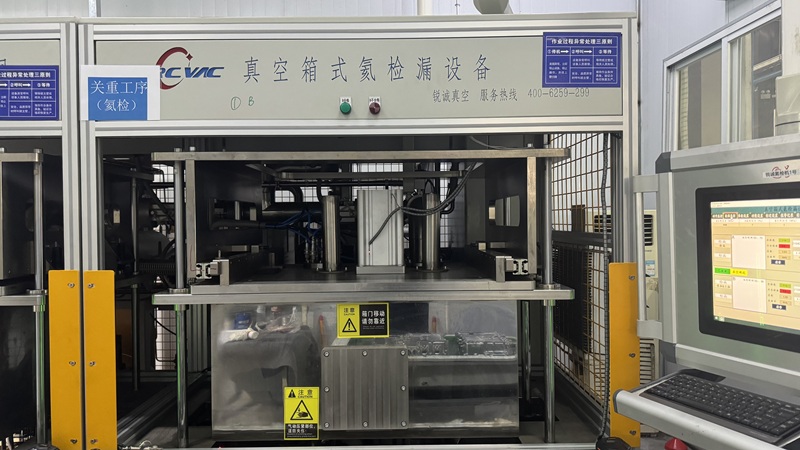
Eliminate Extensive Leak Detection Modes — Helium Testing Addresses Mass Production Quality Control Pain Points of Die-Cast Housings
As a high-precision non-destructive air tightness testing solution widely adopted across the industry, helium mass spectrometry leak testing directly resolves bottlenecks in mass production of new energy ECU housings. Adopting high-purity helium as the tracer gas, this testing method is immune to ambient temperature, irregular housing geometries and water-cooled cavities, delivering ultra-high detection precision to capture all micro leakage points.
Unlike conventional air testing that only yields pass/fail judgements, helium leak testing enables quantitative leakage rate measurement and precise pinpointing of leak locations. This empowers die-casting manufacturers to optimize die-casting flow velocity, demolding processes and welding parameters, minimizing defects such as pores and pinholes at the production source and steadily lifting the first-pass yield of housings.
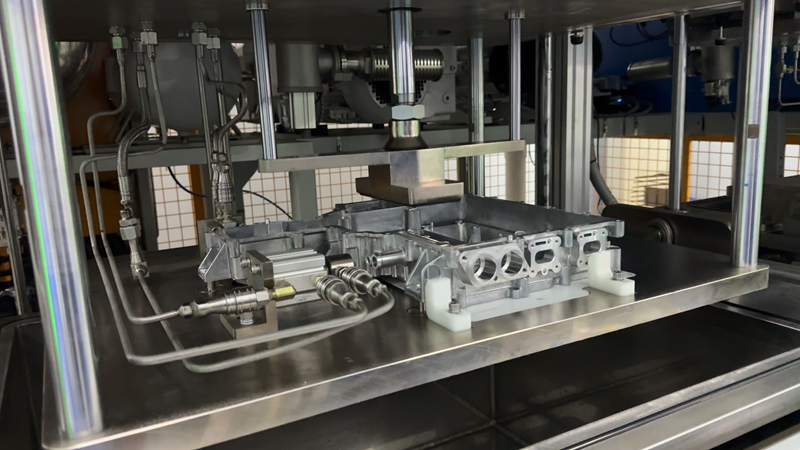
Optimized for Aluminum Die-Cast Housings: Non-Destructive Helium Testing Ideal for Component Mass Production
New energy ECU housings are all thin-walled, precision-cavity aluminum die castings with stringent requirements for testing media and pressure. Helium is an inert, harmless gas that causes no chemical corrosion or residual contaminants during testing, leaving aluminum substrates and precision-machined housing surfaces intact.
ECU housings that pass helium leak inspection can proceed directly to machining, sealing and assembly processes without secondary cleaning or drying, avoiding disruptions to production line tact time and supporting large-scale mass manufacturing of new energy vehicle housings. In addition, the housings consistently meet the industrial IP67 dust and water resistance standard, complying with supply specifications for all passenger and commercial vehicle ECU housings.
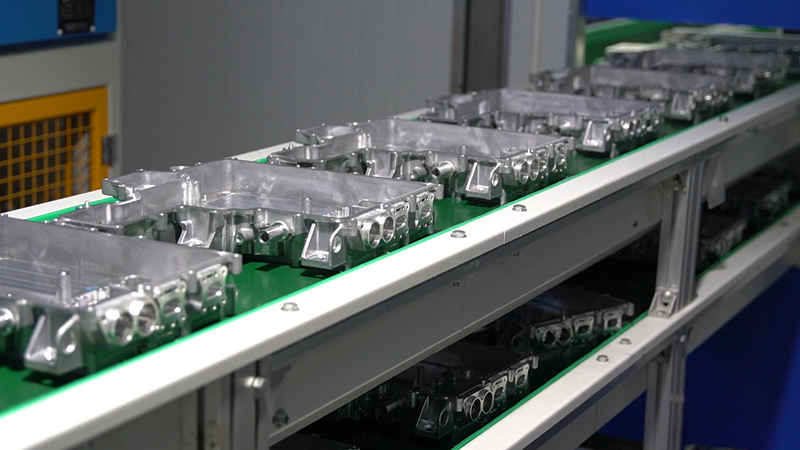
Zhengheng Power: Build a Housing Helium Leakage Quality Control System Aligned with Supply Chain Standards
Positioned as a supplier of new energy three-electric die-cast components and compliant with OEM supply chain audit criteria, Zhengheng Power has established a dedicated air tightness inspection workshop equipped with multiple professional helium testing devices. We implement 100% full helium leak testing for premium water-cooled ECU housings and integrated die-cast housings. Our closed-loop helium leakage quality control system cuts housing air tightness defect rates, ensures consistent finished component quality and supports long-term bulk delivery for new energy vehicle clients.
Quality control for new energy vehicle components has grown increasingly sophisticated, and air tightness testing of ECU housings is no longer a simple sampling procedure. For aluminum die-cast housings with complex internal cavities and high waterproof ratings, helium leak testing stands as a core process to eliminate micro leakage, mitigate after-sales risks and satisfy OEM supply chain standards. Focused on the manufacturing of new energy ECU housings, Zhengheng Power reinforces the sealing safety of all components through standardized helium leak quality control protocols.
Post time: Jun-30-2026