

Zhengheng Power | How Does an Aluminum Ingot Become a Car Engine Block?
From the moment aluminum alloy raw material enters the factory to the moment a usable engine block is assembled, it undergoes multiple stages, including smelting and purification, mold and sand core making, casting, cleaning, heat treatment, machining, rinsing, airtightness testing, and dimensional inspection.
Therefore, an aluminum alloy raw material is not simply poured into a mold and becomes a finished product. It requires continuous coordination of material processing, casting, heat treatment, machining, and inspection. The material, process, and verification requirements are not entirely the same for different engine blocks.
Step 1: Confirm the Material and Control the State of the Molten Aluminum
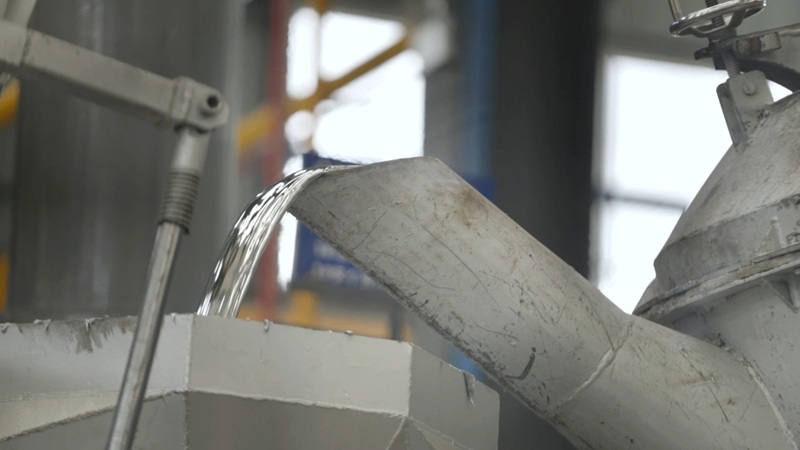
Production begins with the requirements of raw materials and alloys. The aluminum alloy grade affects fluidity, strength, heat treatment capability, corrosion resistance, and machinability. After the raw material enters production, it needs to be melted, its composition controlled, refined, degassed, slag removed, and its temperature managed according to process requirements. Gases, oxide inclusions, and temperature fluctuations in the molten aluminum will affect the internal quality of the subsequent castings.
Step 2: Mold and Sand Core Jointly Shape Complex Internal Cavities
The engine block’s external shape is formed by the mold, while complex internal structures such as water channels and oil passages may be achieved using sand cores or other forming methods. The size, strength, venting, and positioning of the sand core directly affect the internal cavity contour and local wall thickness. Before formal production, engineers need to determine the parting line, pouring, venting, cooling, and ejection schemes.
Step 3: Ensure Smooth Filling of Molten Aluminum and Solidification as Planned
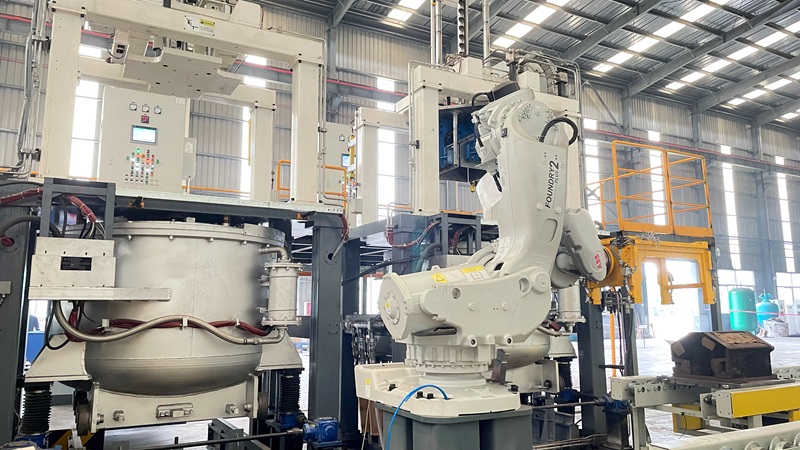
Depending on the cylinder block structure, alloy, performance, and batch size targets, the project may employ high-pressure, low-pressure, or gravity casting methods. Regardless of the method used, the goal is to ensure the molten aluminum smoothly reaches all locations and to control solidification quality through feeding and cooling design.
Step 4: Remove Sprues and Risers, Complete Cleaning and Necessary Heat Treatment
After the blank leaves the mold, the sprues, risers, flash, and residual sand core need to be removed, and the surface cleaned. At this point, the product has the cylinder block contour but has not yet reached the precision required for engine assembly. If material and performance requirements necessitate it, the casting will undergo appropriate heat treatment. Heat treatment can adjust material properties, but it can also cause dimensional changes. Therefore, process parameters, clamping methods, and deformation control must be coordinated with subsequent machining.
Step 5: Machining Establishes True Assembly Accuracy
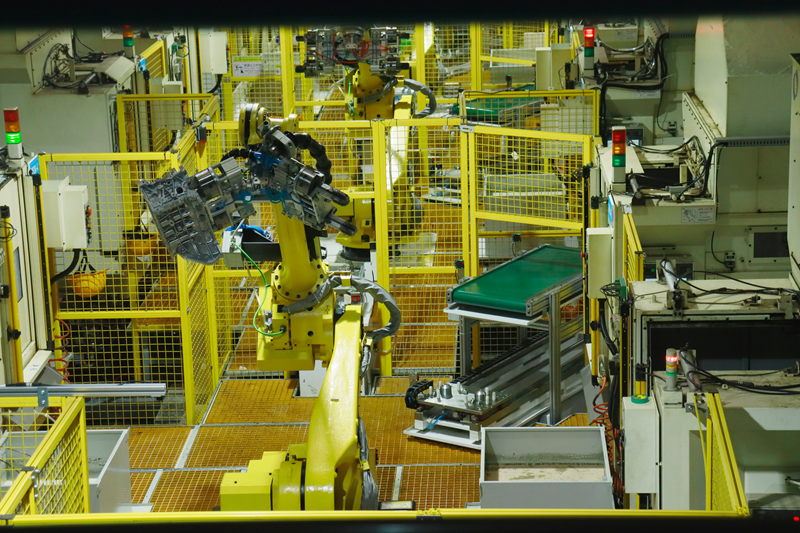
Cylinder bores, crankshaft bores, mating surfaces, mounting holes, threaded holes, and water and oil passage interfaces require multiple machining passes to achieve dimensional, geometric, and surface roughness requirements. Machining datums and fixture positioning affect the positional relationships between multiple features. Casting and machining must be coordinated.
Step 6: Cleaning, Airtightness, and Inspection for Quality Assurance
After machining, parts need to be cleaned of chips, oil, and hole residue. Cylinder blocks involving water jackets, oil passages, and sealing cavities also require airtightness testing according to technical requirements to confirm the absence of leaks that could affect use. Dimensional inspection, material and mechanical property verification, appearance, and necessary non-destructive or metallographic inspections together constitute quality assurance. Zhengheng Power has established a dual CNAS layout with its headquarters testing and experimental center and Tonglin casting laboratory, providing support for a closed-loop quality system from materials to cast blanks and precision-machined finished products.
Zhengheng Power focuses on the research and development and production of engine blocks and related automotive parts, providing one-stop services from product design, mold making, casting to machining.
Post time: Aug-13-2026