

How Does Friction Stir Welding Solve Joining Challenges for New Energy Vehicle “Three-Electric” Aluminum Components?
Power battery trays, motor and electronic control housings, and liquid-cooling components impose stringent requirements regarding weld strength, sealing, and deformation control. As a solid-state joining process, friction stir welding (FSW) offers a new manufacturing pathway for these aluminum alloy components.
Why Do “Three-Electric” Components Increasingly Test Welding Capabilities?
Aluminum alloys are widely used for structural components in the power battery, motor, and electronic control systems of new energy vehicles. Power battery trays must balance load-bearing, protection, and sealing functions; motor and electronic control housings require structural strength and waterproofing; and liquid-cooling plates must ensure the long-term reliability of internal flow channels.
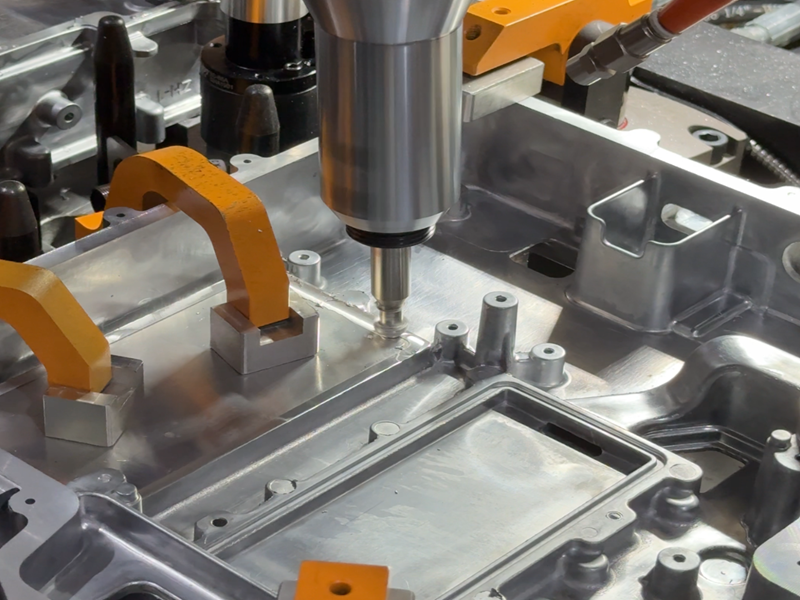
These components are typically large with thin walls, featuring long weld seams, complex contours, or strict airtightness requirements. Excessive welding heat input can easily lead to deformation, while internal weld defects—such as lack of fusion, porosity, or micro-cracks—can compromise sealing integrity and operational safety. Consequently, the welding process must not only join the parts but also simultaneously control strength, dimensional accuracy, and airtightness.
What Is Friction Stir Welding?
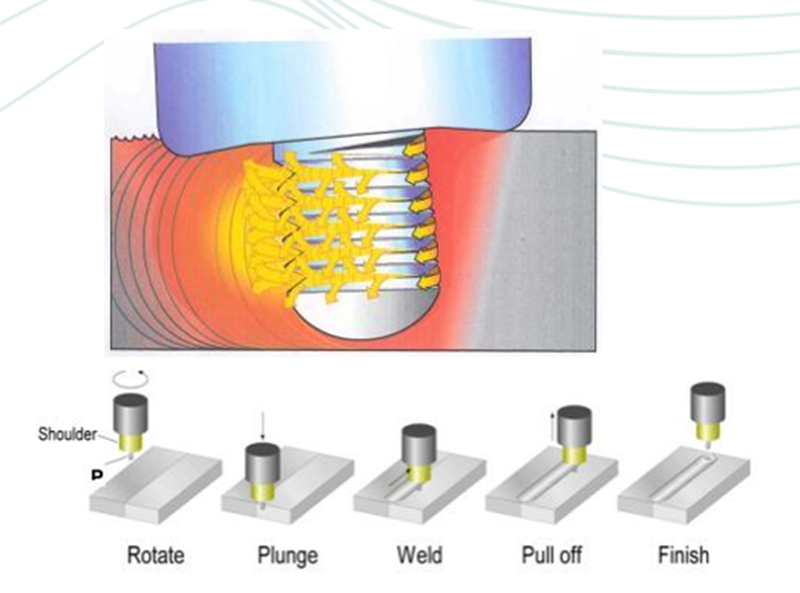
Friction stir welding generates heat through friction between a high-speed rotating tool and the workpiece, bringing the joining zone into a plasticized state; the movement of the tool and the flow of material then form the joint. Since the material generally does not undergo bulk melting during the process, it is classified as a solid-state joining technique.
Compared to processes that rely on the solidification of a molten pool to form a weld, FSW involves relatively concentrated heat input, which helps reduce the risk of deformation in thin-walled aluminum parts. Furthermore, the process requires no filler wire and allows for easy automated control once stabilized, making it ideal for long weld seams and mass production.
A Good Process Still Relies on Upfront Design
Friction stir welding cannot be applied indiscriminately to every structure. Factors such as material grade, wall thickness, joint configuration (lap or butt), weld path, fixture rigidity, and backing support conditions all influence the final outcome. If the product design fails to provide adequate clearance for the welding tool or if assembly gaps are poorly controlled, subsequent process optimization becomes significantly more difficult.
Therefore, when developing power battery trays, motor and electronic control housings, and liquid-cooling components, it is essential to simultaneously evaluate casting or profile structures, machining datums, weld locations, and inspection protocols during the early stages of product development. Only through the synergy of design, manufacturing, and inspection can process advantages be truly translated into consistent product quality.
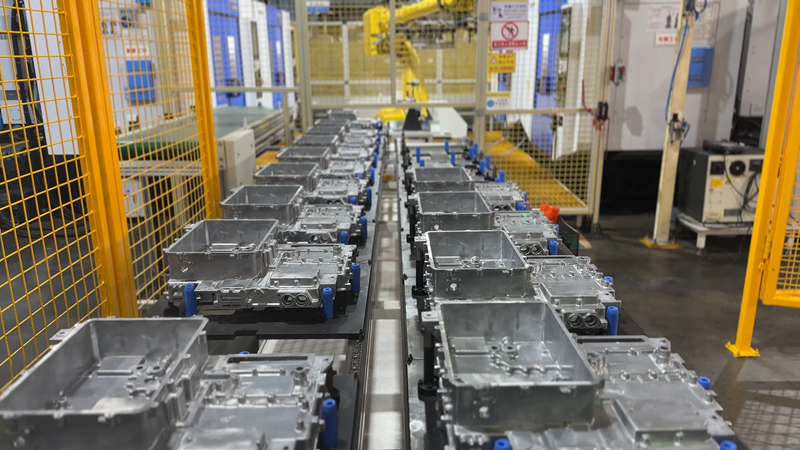
Post-welding inspection determines the reliability of mass-produced deliveries.
For “Three-Electric” (battery, motor, and control system) components requiring hermetic sealing, passing a visual inspection does not guarantee airtightness. Post-welding procedures typically require dimensional checks, airtightness testing, and necessary joint performance verification to ensure the product meets actual specifications. Issues such as leakage or deformation identified during the trial production phase should be traced back to assembly, fixturing, and welding parameters, rather than simply relying on rework of the finished product.
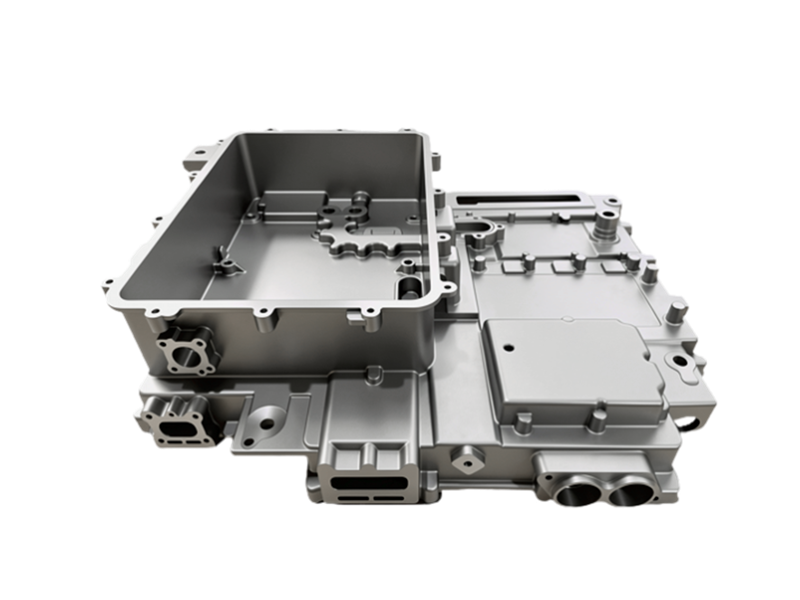
Zhengheng Power is continuously enhancing its one-stop manufacturing capabilities—spanning design, casting, machining, joining, and inspection—for aluminum alloy components used in new energy vehicles. By integrating processes like friction stir welding with upstream and downstream operations, the company provides comprehensive manufacturing support for customers’ “Three-Electric” component development, facilitating a smooth transition from prototype validation to mass production.
Post time: Jul-31-2026