

What new demands does the new energy era place on the manufacturing of engine blocks for hybrid and extended-range vehicles?
The rapid growth of new energy vehicles (NEVs) does not imply a single powertrain path. Hybrid and extended-range models impose new requirements for high efficiency, compactness, and stable operation, thereby driving further upgrades in engine block manufacturing.
**Diversified Powertrain Paths: The Evolving Role of the Engine**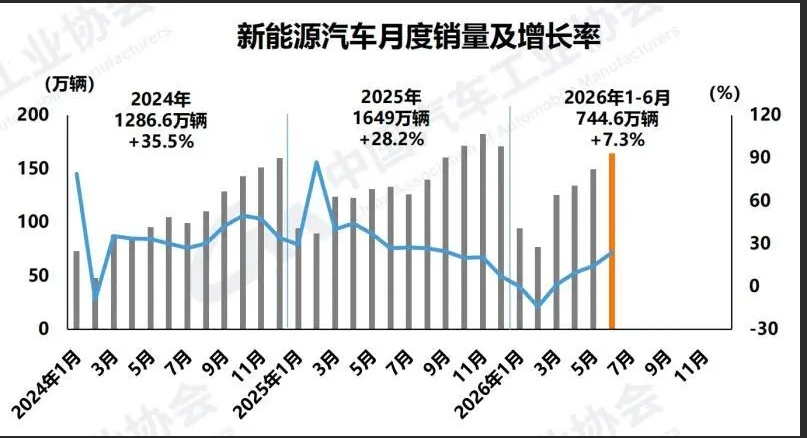
In the first half of 2026, NEV sales in my country reached 7.446 million units, accounting for nearly half of all new vehicle sales. While battery electric vehicles (BEVs) have developed rapidly, plug-in hybrid and extended-range models have also established significant market presence. In these vehicles, the engine is no longer merely a standalone power source in the traditional sense; instead, it integrates with electric motors, batteries, and control systems to form a highly efficient powertrain.
-Image source: EV Century
This shift in roles brings new design priorities. Hybrid and extended-range engines often need to operate within specific high-efficiency ranges while accommodating frequent start-stop cycles, thermal cycling, compact packaging, and overall vehicle lightweighting. As the engine’s foundational structural component, the block must strike a balance between strength, rigidity, sealing capabilities, cooling performance, and machining precision.
**Lightweighting Must Not Come at the Cost of Reliability**
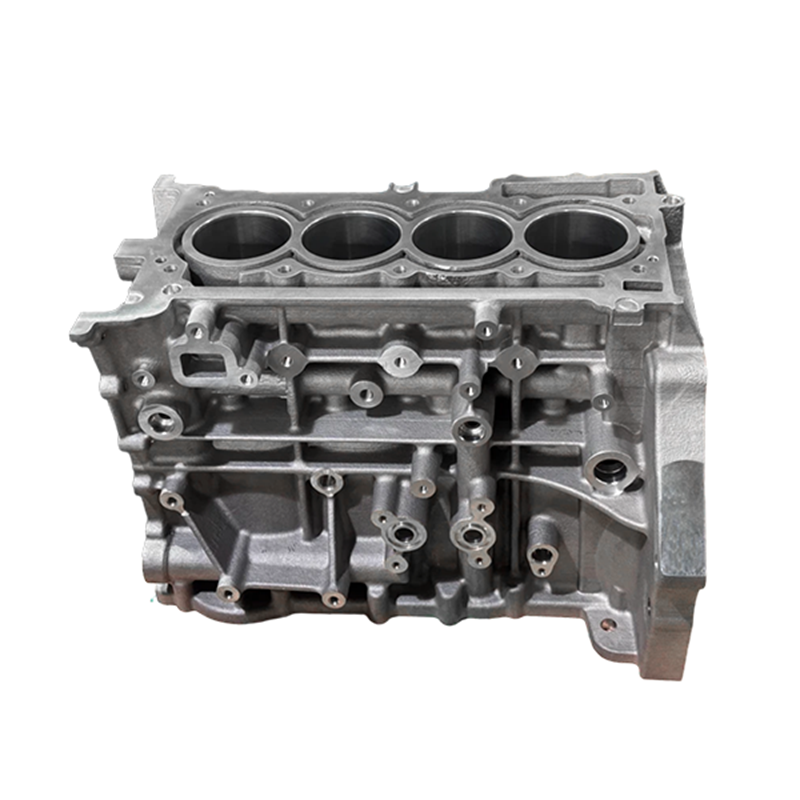
Aluminum alloy blocks are a key choice for lightweighting, offering reduced powertrain weight and excellent thermal conductivity. However, reducing wall thickness, integrating oil and coolant passages, or downsizing the structure increases the complexity of casting and machining. Issues such as localized thermal hotspots, complex internal cavities, cylinder bore deformation, and sealing surface precision require careful management during both the design and manufacturing phases.
Conversely, commercial vehicles, construction machinery, and certain high-load applications still require materials such as high-grade gray cast iron, compacted graphite iron (CGI), or high-strength ductile iron. There is no simple “better or worse” regarding material choices; the key is selecting the right solution based on load, thermal efficiency, weight, cost, and production volume.
.png)
**High Efficiency Demands Precision Manufacturing Control**
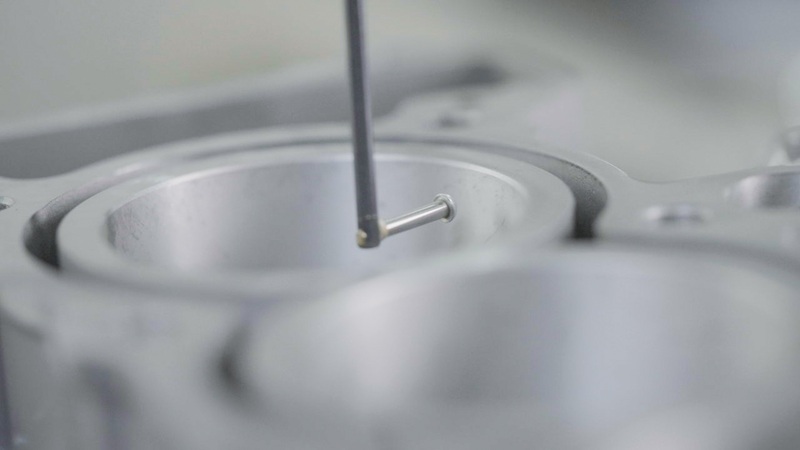
Improvements in engine efficiency are often accompanied by higher peak combustion pressures and stricter requirements for friction control. The dimensions, geometric tolerances, and surface conditions of critical areas—such as cylinder bores, main bearing bores, and cylinder head mating surfaces—directly impact sealing, lubrication, and operational stability. Furthermore, the consistency of the casting blank determines whether subsequent machining processes can reliably control stock allowance and precision. Consequently, the manufacturing of engine blocks requires the integration of materials, casting, heat treatment, machining, and inspection into a cohesive process. Only by identifying risks through early-stage process reviews, accumulating data via trial production verification, and maintaining consistency through mass-production process control can the long-term reliability requirements of hybrid and extended-range powertrain systems be met.
**One-Stop Manufacturing Supports Rapid Iteration of Powertrain Products**
Zhengheng Power has long focused on the R&D and manufacturing of engine blocks and related automotive components, offering one-stop services that encompass design, tooling, casting, and machining. The company possesses capabilities in both cast iron and cast aluminum component manufacturing, providing tailored products and development support for various powertrain technologies.
As the industry transitions to the new energy era, Zhengheng Power remains committed to addressing the demands of high-efficiency internal combustion engines as well as hybrid and extended-range powertrain systems. By synergizing expertise in materials research, diverse casting methods, precision machining, and inspection, the company helps customers shorten new product development cycles and ensure stable product quality, thereby providing reliable core component support for diverse powertrain technology pathways.
Post time: Jul-31-2026