

Zhengheng Power | More Than Just an Aluminum Shell: Manufacturing Challenges of New Energy Motor Housings and Control Boxes
New energy components such as motor housings and control boxes resemble aluminum alloy containers in appearance, but they simultaneously bear the responsibilities of structural connection, component installation, thermal management, sealing protection, and dimensional positioning. Deviations in a hole position, damage to the sealing surface, or internal defects can be amplified during assembly and use. Therefore, manufacturing these products cannot simply be about “can it be pressed out?” From the initial drawing review, the team needs to place casting, machining, cleaning, airtightness, and assembly requirements on the same quality chain.
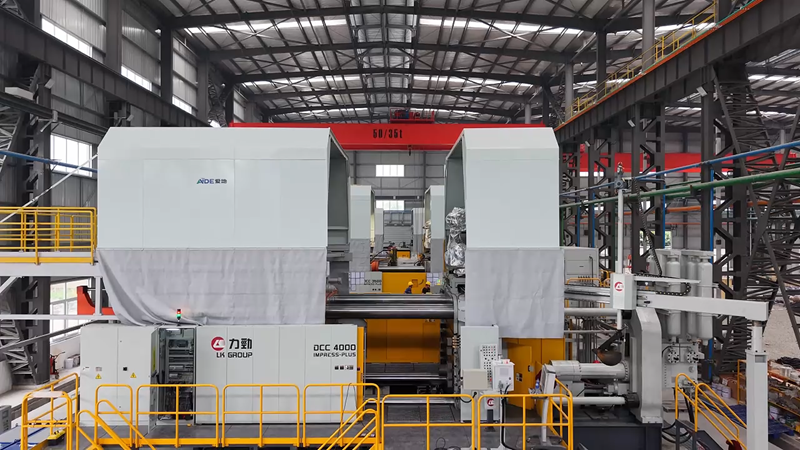
Casting Stage: Beyond the External Appearance, Attention Must Be Paid to the Unseen Internal Quality
The gating system, venting or vacuum scheme, locally thick areas, cooling conditions, and mold temperature can all affect internal quality and subsequent processing performance. At the beginning of the project, risks should be identified by considering stress areas, sealing boundaries, machining depth, and potential leakage paths. Achieving visible external compliance is only the first step; whether pores are exposed after machining is the real issue that many housing projects need to address in advance.
Machining Stage: Accurate Fit of Installation, Connection, and Sealing Interfaces
Bearing positions, mounting holes, sealing grooves, connecting surfaces, and positioning datums need to be machined to meet drawing requirements. The selection of machining datums, whether clamping causes deformation, and the arrangement of tools and processes all affect positional relationships and surface quality.
The earlier casting and machining are coordinated, the easier it is to rationally set machining allowances and avoid high-risk areas. Conversely, if the blank design and machining plan proceed independently, problems such as insufficient allowances, cut-through, deformation, or post-machining defects may occur.
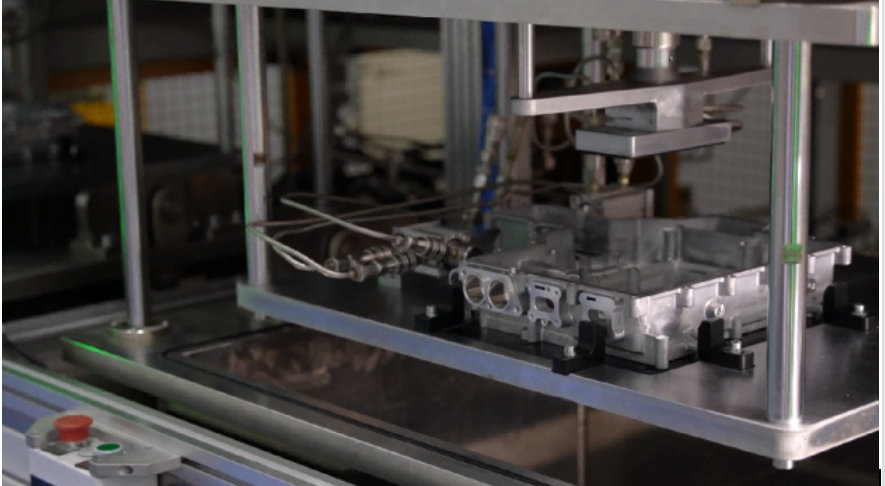
Inspection Stage
Housing involving cooling circuits or sealed cavities typically requires airtightness requirements based on product application. Inspection methods, pressures, media, permissible leakage, inspection frequency, and judgment methods should all be clearly defined in drawings or technical agreements. Zhengheng Power’s introduction of helium gas detection can detect leaks, confirm results, and trace and close loops for anomalies.
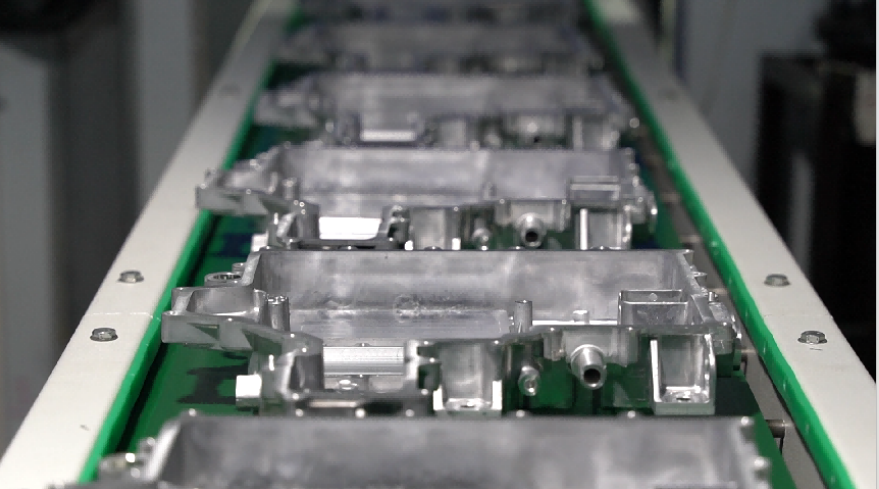
Mass Production Stage: Cleaning, Traceability, and Change Management are Equally Important
Chips, burrs, cleaning residues, and foreign matter in ducts after machining can also affect assembly and long-term use. Raw material batches, smelting furnace runs, production times, key processes, and test results also need to be recorded according to project requirements.
When materials, molds, equipment, processes, or key inspection methods change, corresponding assessments and communication should be conducted. Stable mass production is not about repeatedly replicating the first piece, but about keeping changes under control.
A reliable housing comes from a complete manufacturing chain. From motor housings to electrical control enclosures, what truly affects reliability is not a single process, but the smooth integration of design, casting, machining, cleaning, testing, and project management. Zhengheng Power connects its capabilities in product design, mold making, casting, and machining, and can collaboratively plan manufacturing and verification routes based on customer drawings and technical requirements.
A reliable aluminum alloy housing must not only meet functional requirements on the drawings but also withstand machining, testing, and batch changes on the production line. Only when the entire manufacturing chain works around the same set of product requirements can a lightweight “aluminum housing” truly become a reliable functional component.
Post time: Aug-20-2026