

Zhengheng Power | What New Manufacturing Requirements Are Emerging as Large-Displacement Motorcycles Gain Momentum?
In recent years, the motorcycle market has been undergoing a noticeable shift in product structure.
Beyond traditional commuting, motorcycles are increasingly being used for leisure riding, long-distance touring, and outdoor exploration. As a result, medium- and large-displacement motorcycles are attracting growing market attention. At the same time, Chinese motorcycle manufacturers are expanding into overseas markets, with products continuing to move toward higher performance and greater added value.
According to recent industry information released by the China Chamber of Commerce for Motorcycles, large-displacement motorcycles for leisure and recreational use recorded significant growth in August 2026, while exports continued to be an important driver of industry development. These trends reflect the ongoing product upgrading and global expansion of the motorcycle industry.
Higher Displacement Means More Than a Larger Engine
For motorcycle engines, changes in displacement, cylinder configuration, and performance requirements involve much more than simply increasing engine size.
Core engine components such as cylinder blocks, cylinder heads, crankcases, and housings must be designed and manufactured according to the engine architecture, material properties, operating conditions, and performance targets.
As powertrain systems become more complex, manufacturing requirements extend beyond whether a component can be successfully formed. Dimensional accuracy, machining quality, assembly requirements, and consistency in volume production must all be considered.
As motorcycles continue to evolve toward higher performance and more diverse applications, suppliers of core engine components also need to strengthen their product development and manufacturing capabilities.
From Individual Processes to Integrated Manufacturing
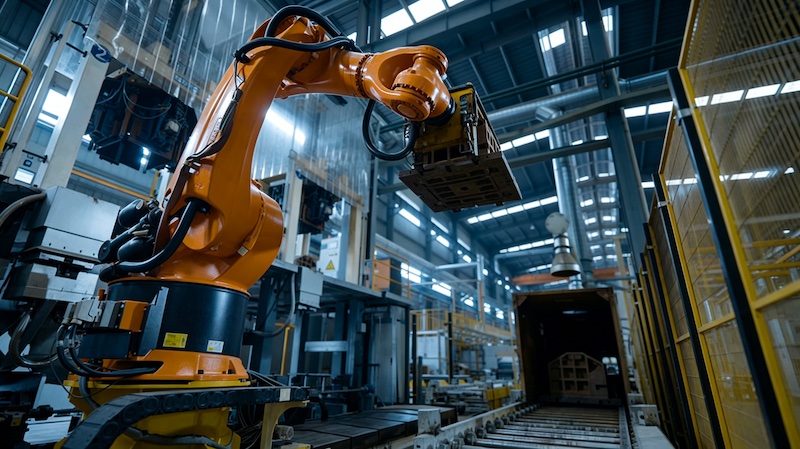
Bringing a core engine component from design to volume production usually involves several interconnected manufacturing processes.
From early-stage product and process analysis to tooling, casting, precision machining, inspection, and subsequent processing, coordination between each stage can directly affect both product development and volume production.
Different engine architectures and product requirements call for different manufacturing routes based on factors such as material, structure, performance targets, and production volume. There is no single manufacturing process that can address every requirement.
As a result, the role of core component suppliers is evolving beyond individual manufacturing operations toward closer involvement in product development and the integration of multiple manufacturing processes.
Going Global Requires Consistent Manufacturing
Alongside product upgrades, overseas markets are becoming an increasingly important source of growth for China’s motorcycle industry.
According to customs data released by the China Chamber of Commerce for Motorcycles, China exported 9.934 million motorcycles from January to June 2026, representing a year-on-year increase of 12.90%. Export value reached USD 6.603 billion, up 19.70% year on year. These figures indicate continued growth for Chinese motorcycles in overseas markets.
As products enter more countries and markets, supply chains must respond to more than production capacity alone. Different project timelines, quality requirements, and reliable delivery all become increasingly important.
For manufacturers of core engine components, maintaining a smooth transition from product development and prototype validation to volume production is therefore an important capability in supporting customer projects.
Building Manufacturing Capabilities for High-Performance Motorcycles
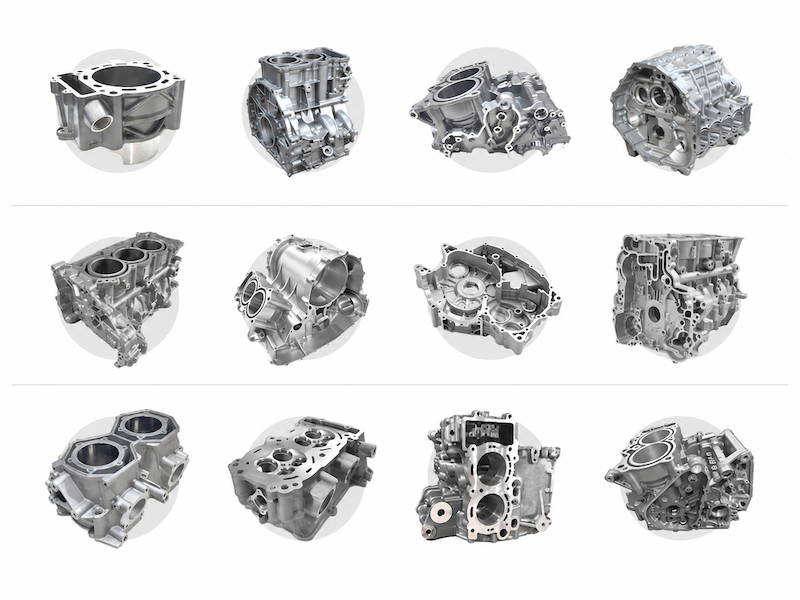
With years of experience in the development and manufacturing of core engine components, Zhengheng Power continues to expand its motorcycle powertrain component business.
Our product portfolio includes cylinder blocks, cylinder heads, crankcases, and housings, with manufacturing experience covering a range of engine configurations, including single-cylinder, twin-cylinder, three-cylinder, and four-cylinder engines.
To support different product development and volume production requirements, Zhengheng Power has established integrated manufacturing capabilities covering product design, tooling, casting, and precision machining, while continuing to expand the application of technologies such as 3D printing and thermal spraying.
The development of large-displacement and high-performance motorcycles is creating new opportunities across the supply chain while also raising new requirements for core component manufacturing.
As the motorcycle market continues to evolve, Zhengheng Power will continue to strengthen its product, process, and manufacturing capabilities to support customers throughout different stages of their powertrain component projects.
Post time: Sep-08-2026