

Zhengheng Power | Manufacturing Challenges Across Different Motorcycle Engine Cylinder Block Designs
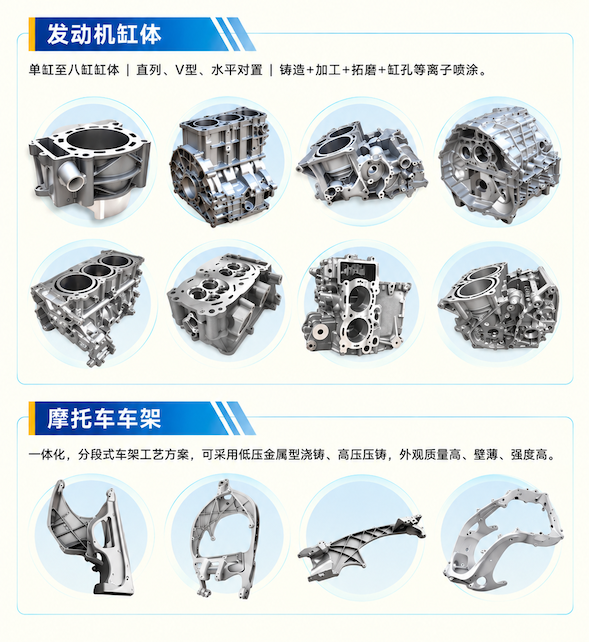
From single-cylinder to multi-cylinder engines, motorcycle powertrains vary significantly in their configurations, performance requirements, and intended applications.
For engine cylinder block manufacturing, these differences extend beyond the number of cylinders. They also involve overall component geometry, internal passages, mounting features, material selection, and manufacturing processes.
As the motorcycle industry continues to develop larger-displacement, higher-performance, and more diverse models, cylinder block manufacturing requires a careful balance between structural complexity, machining precision, and production consistency.
Drawing on its experience in the development and manufacturing of core engine components, Zhengheng Power continues to expand its motorcycle cylinder block business and build expertise across different engine configurations.
How Do Manufacturing Requirements Differ Across Engine Configurations?
Single-cylinder engines generally feature relatively compact designs and fewer components. Manufacturing their cylinder blocks requires careful attention to critical mounting locations, cylinder bore accuracy, and the relationship between component geometry and assembly requirements.
For twin-cylinder engines, different cylinder arrangements can lead to different structural layouts and manufacturing requirements.
For example, inline-twin, V-twin, and horizontally opposed twin-cylinder engines differ in the design of their cylinder blocks or related structural components. Machining datums, critical bore locations, and assembly requirements must therefore be evaluated according to the specific engine design.
As the number of cylinders increases, engine structures generally become more complex. The positional relationships between cylinder bores, internal component layouts, and machining consistency may place additional demands on manufacturing processes.
However, cylinder count alone does not determine manufacturing difficulty. The specific component design, material properties, dimensional requirements, and process route are the key factors in selecting an appropriate manufacturing solution.
Why Is the Casting Process Critical for Complex Cylinder Block Geometries?
Motorcycle engine cylinder blocks may incorporate complex features such as reinforcing ribs, mounting structures, and passages for cooling and lubrication.
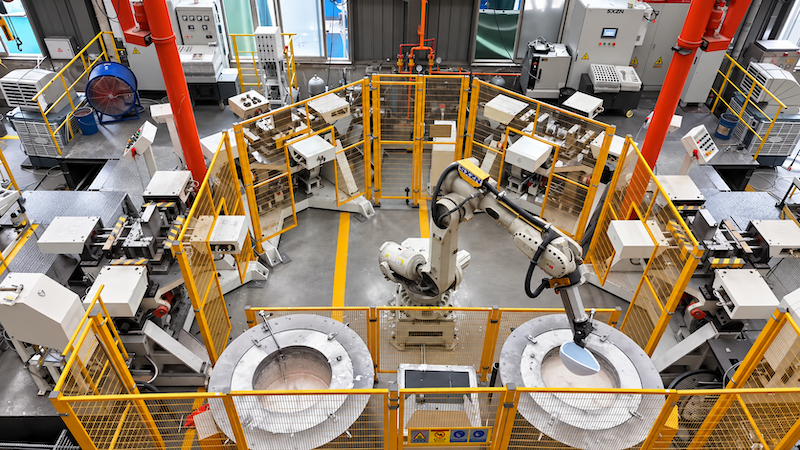
For aluminum alloy cylinder blocks, casting process development must consider component geometry, molten metal filling behavior, solidification characteristics, and internal casting quality.
For example, variations in local wall thickness can affect solidification conditions, while complex internal cavities may increase the difficulty of producing the required geometry. Different requirements for dimensional stability and internal quality also influence process planning.
Therefore, casting solutions must be evaluated and validated during product development, taking into account both structural characteristics and manufacturing conditions.
Zhengheng Power offers a range of aluminum alloy casting capabilities and develops process plans based on the material, geometry, and production requirements of different components.
The casting process must also establish suitable conditions for subsequent precision machining, ensuring effective coordination between component forming and the machining of critical features.
What Precision Machining Challenges Do Multi-Cylinder Designs Present?
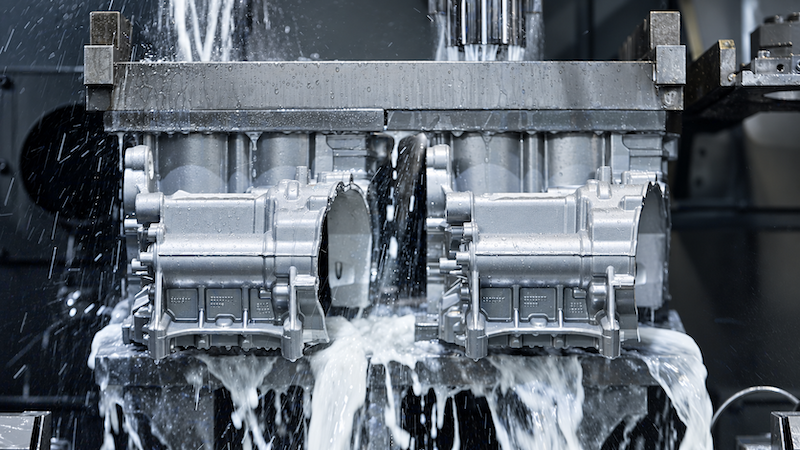
After casting, engine cylinder blocks generally require precision machining of cylinder bores, mating surfaces, mounting holes, and other critical features.
Different engine configurations may have different machining requirements for these features.
In multi-cylinder designs, particular attention must be paid not only to the dimensions and surface quality of individual cylinder bores but also to their relative positions and the accuracy of associated mounting features.
The selection of machining datums, operation sequences, and in-process inspection methods all influence whether the finished component meets its design specifications.
During volume production, manufacturers must also maintain dimensional consistency across production batches and ensure stable machining processes.
Precision machining is therefore more than a means of achieving final component dimensions. It is a critical link between structural design and the assembly requirements of the finished engine.
Matching Manufacturing Solutions to Different Engine Applications
There is no single manufacturing solution suitable for every motorcycle engine cylinder block.
Different engine configurations have distinct requirements in terms of materials, casting methods, machining operations, and production volumes. Manufacturing approaches must therefore be evaluated against each customer’s technical specifications.
For component manufacturers, understanding the manufacturing characteristics of different engine designs and effectively integrating casting, precision machining, and quality inspection are essential to supporting diverse product development requirements.
Zhengheng Power continues to build manufacturing experience across single-cylinder, twin-cylinder, three-cylinder, and four-cylinder motorcycle engine applications, while further developing its capabilities to support customer requirements from product development through volume production.
Post time: Oct-26-2026