

Reveal! Why is engine cylinder block only made by casting, not forging?
Recently, a video featuring the low-pressure die-casting of a V6 engine block unexpectedly went viral, garnering a massive number of views and thousands of comments. Among them, the most popular discussion was: “Given the high strength of forging, would it not be better to use forging for engine blocks?” Today, we will use the practical case of the V6 engine block to thoroughly explain the core logic at once – it’s not that forging is not strong, but rather that casting is more suitable for engine blocks. This reflects the optimal choice in industrial manufacturing.
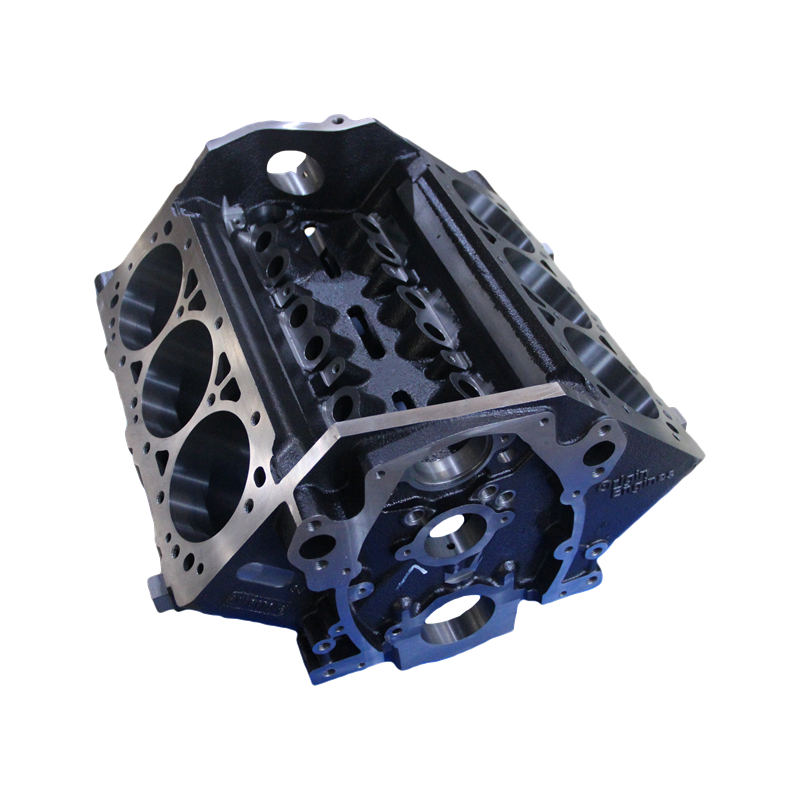
Let’s briefly clarify two core processes: casting = “liquid forming” – melting metal into a liquid, pouring it into a pre-made mold (with sand cores), and forming it after cooling. The biggest advantage is that “complex shapes can be made”; forging = “solid shaping” – forming metal billets by high-pressure forging and extrusion, equivalent to “modern blacksmithing”. The biggest advantage is “high strength”, but the shortcomings are also obvious: only simple shapes can be made.
Why do we choose casting over forging for engine blocks? There are three core reasons, which will be explained thoroughly with the V6 case study:
Firstly, structure determines everything – forging cannot create the “complex maze” of a cylinder block. The interior of an engine cylinder block is not solid at all, but is filled with maze-like water and oil channels. These structures are the core of engine cooling and lubrication, and are indispensable. Take the V6 engine cylinder block as an example, its internal structure is extremely complex. Before casting, it requires the preparation of more than ten sand cores of different parts to create these interlaced hollow cavities and narrow passages. The core limitation of forging is that it “can only produce simple shapes”, such as regular parts like shafts, rods, and flanges. It is impossible to create such a complex hollow structure as a cylinder block through forging. Forcing forging will only result in cracks and faults, making it completely unusable.
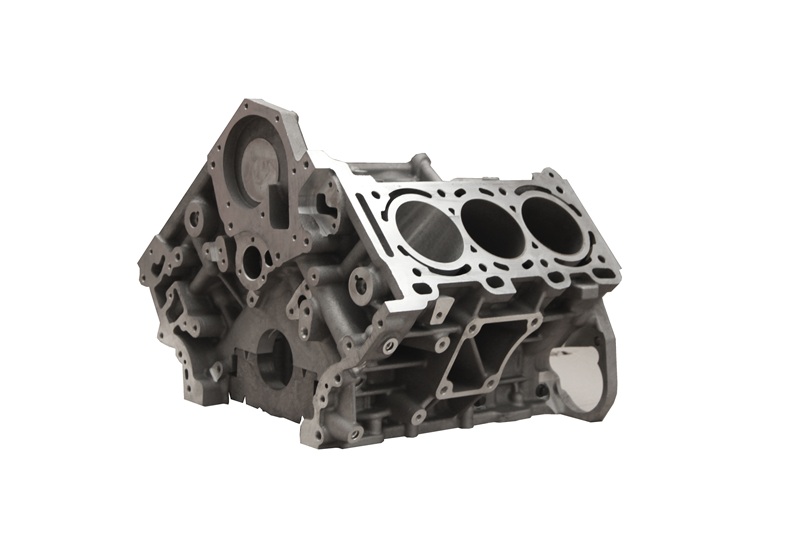
Secondly, materials and heat dissipation – casting is more suitable for the core needs of engines. Current engine blocks, whether V6 or other models, extensively use aluminum alloy materials. The advantages of aluminum alloy are evident: good fluidity, particularly suitable for casting, and after molding, it is not only lightweight (which can reduce vehicle fuel consumption), but also has a faster heat dissipation rate – engines generate a large amount of heat during operation, and rapid heat dissipation can greatly enhance reliability and service life. Although forging has high strength, when dealing with materials like aluminum alloy, it not only poses significant forging challenges but also fails to leverage its advantages of lightweight and easy molding, instead wasting the material’s characteristics.
Thirdly, cost and efficiency – forging is fundamentally unsuitable for mass production of cylinder blocks. Engine cylinder blocks are mass-produced components, with a huge demand for both passenger cars and special vehicles. Cost and efficiency are key. The shortcomings of forging are prominent: it is expensive, slow, and requires a large amount of processing. It is more suitable for small components that bear great stress (such as crankshafts and connecting rods). However, for large-volume, complex structural components like V6 engine cylinder blocks, not only will the production cost multiply several times, but the production efficiency will also be extremely low. The production time for one forged cylinder block can produce 3-5 cast cylinder blocks, which completely fails to meet the needs of large-scale mass production.
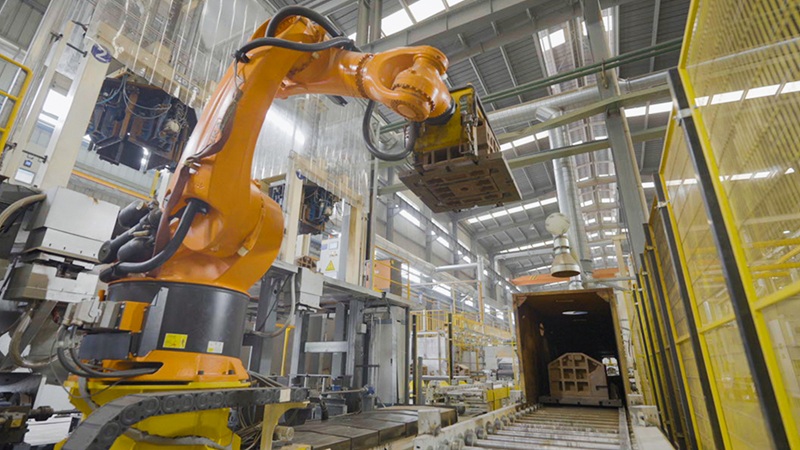
There is another point that is easily overlooked: adaptability for subsequent processing. After the engine cylinder block is molded, it still needs to undergo machining, plasma cylinder hole thermal spraying, and other technologies to enhance its precision and wear resistance. The cast cylinder block has a uniform texture and moderate hardness, making subsequent processing easier and less costly, and it can perfectly adapt to these strengthening processes. However, the forged cylinder block has an extremely high surface hardness, making it difficult and costly to process, and it is also difficult to perform surface strengthening, which fundamentally does not meet the requirements for use in engine cylinder blocks.
Zhengheng Power has been deeply involved in engine block casting for over 20 years, delivering more than 10 million engine blocks in total and serving top customers such as BYD, Great Wall, and SAIC. We possess over 240 patents, a comprehensive quality control system throughout the entire process, and a complete casting process system combined with precision machining and a plasma cylinder bore thermal spraying production line. The core logic of Zhengheng Power’s component manufacturing is to adapt to customer needs, which is the best choice.
Post time: Feb-28-2026