

How to select die-cast aluminum alloys?
In the field of precision die casting, material selection is like building an “appropriate skeleton” for the product, directly determining the performance, reliability, cost, and market competitiveness of the final component. As a solution provider with 3D printing sand mold, casting, and full-process machining capabilities, we understand that scientific material selection is the bridge connecting excellent design and successful manufacturing.
The performance spectrum of die-cast aluminum alloys is broad, and its core properties such as fluidity, strength, and corrosion resistance are mainly determined by the ratio of elements such as silicon (Si), copper (Cu), magnesium (Mg), and iron (Fe). Therefore, precise material selection must systematically consider the following four dimensions:
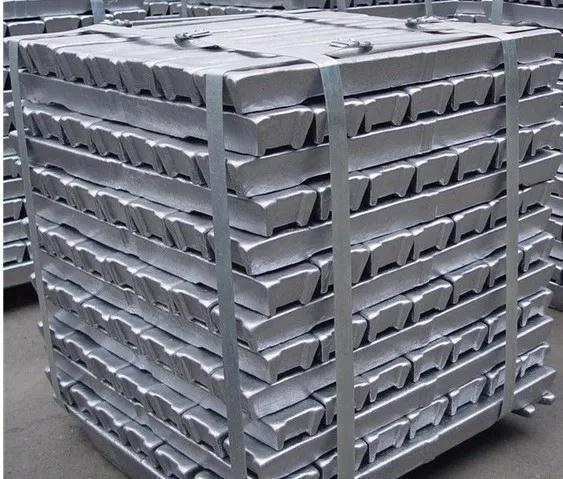
I. Performance Dimension: Meeting the Requirements of Terminal Working Conditions
High-load structural components: such as engine blocks and chassis brackets, require high strength and fatigue resistance. High-strength alloys like A380 and AlSi9Cu3 are preferred.
Corrosion-resistant components: suitable for humid and salt spray environments. A360 or AlMg series alloys are the top choices due to their excellent corrosion resistance.
High-temperature or heat-treated components: such as engine peripheral parts. A380 has better heat resistance; A356 (ZL101A) significantly improves its performance after heat treatment.
High thermal conductivity requirements: such as radiators and motor housings. Aluminum-silicon alloys with high thermal conductivity should be selected.
General structural components: ordinary housings, brackets, etc. ADC12 (A383) is the most common choice due to its good comprehensive performance and economy.
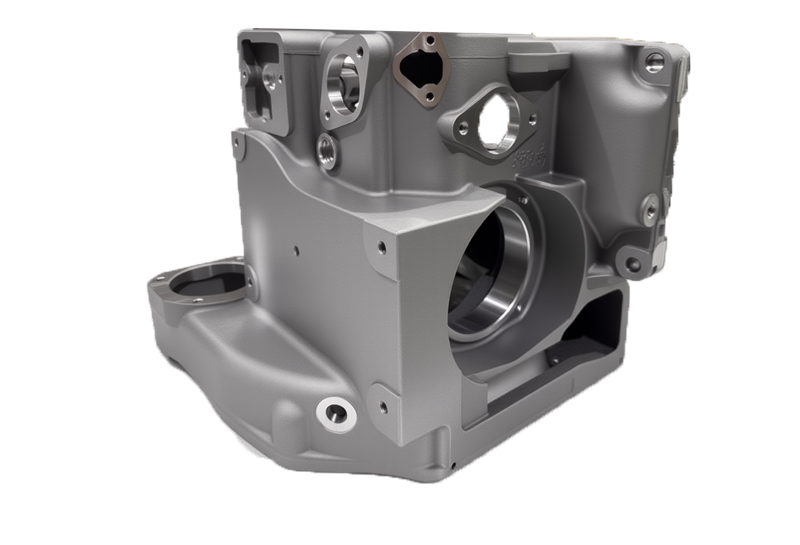
II. Process Dimension: Matching Manufacturing Methods with Part Complexity
Mass production of complex thin-walled parts: ADC12 (A383) and A380 have excellent fluidity and thermal crack resistance, making them ideal choices for large-scale production.
Parts with high density and airtightness requirements: such as battery boxes and chassis parts for new energy vehicles. A356 (ZL101A) can achieve excellent sealing performance under good processing conditions.
Research and development and trial production stage: Relying on 3D printing sand mold (3DP) technology, rapid moldless manufacturing can be achieved. This method completely breaks through the traditional demolding limitations and is particularly suitable for the rapid prototyping of complex structures, small-batch production, and process parameter verification, significantly shortening the development cycle and reducing the risk of early investment.
III. Cost Dimension: Pursuing the Optimal Cost-Performance Ratio throughout the Entire Lifecycle
Mold Life: High-silicon alloys such as ADC12 cause relatively less wear on molds.
Production Yield: A380 and ADC12 have good fluidity, which helps reduce casting defects and increase the pass rate.
Subsequent Processing Costs: ADC12 is easy to machine; if anodizing is required, special alloys such as AlMg series should be selected, and the impurity content must be strictly controlled.
Comprehensive Cost Optimization: It is necessary to consider the material price, process adaptability, yield, and post-processing costs comprehensively and choose the solution with the lowest total cost.
IV. Dimension of Post-processing and Surface Treatment
Machined parts: Preferable alloys such as ADC12 and A380, which are easy to machine, should be selected.
Welded assemblies: Alloys with low porosity and optimized casting processes should be chosen to minimize the risk of welding porosity.
Anodizing: Alloys of the AlMg series and others suitable for oxidation must be used, and the content of elements such as copper and silicon should be strictly controlled (e.g., Cu ≤ 0.1%) to achieve the desired surface texture and effect.
We are committed to deeply integrating material selection with product design, molding processes, and post-processing to provide a one-stop closed-loop solution from design to processing. With profound technical accumulation in the field of precision die-casting, we can not only efficiently complete the mass production of conventional alloys but also undertake customized demands for special alloys.
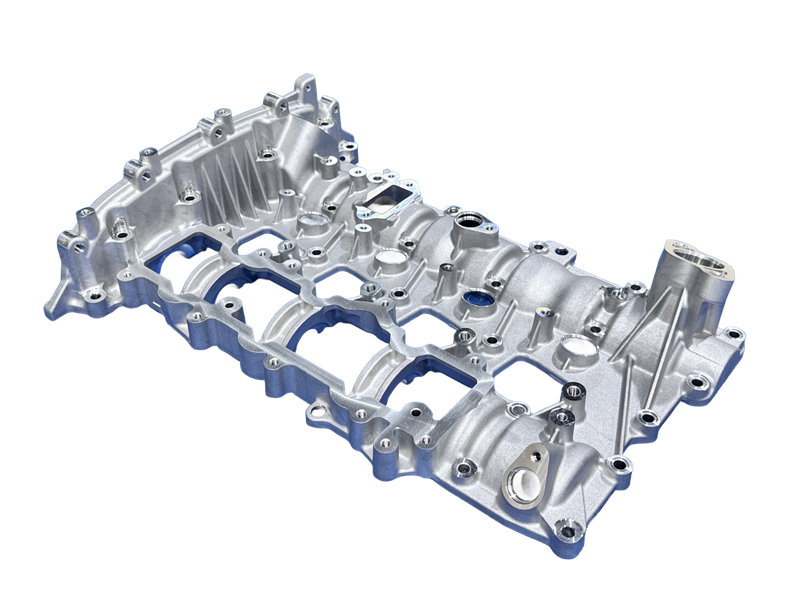
The successful selection of die-casting aluminum alloy materials is essentially a precise balance in seeking the optimal solution under multi-dimensional constraints (performance, process, cost, and delivery time). Zhengheng Power is willing to leverage its full-process technological reserves and full-cycle service capabilities to become your reliable partner and jointly transform the potential of materials science into the core competitiveness of products.
Post time: Jan-26-2026