

High-pressure casting vs. conventional casting, the difference is surprisingly significant!
In the casting production industry, high-pressure casting and conventional casting are the two most widely used processes. Today, we will use plain language to deeply explore the core differences between the two casting processes.
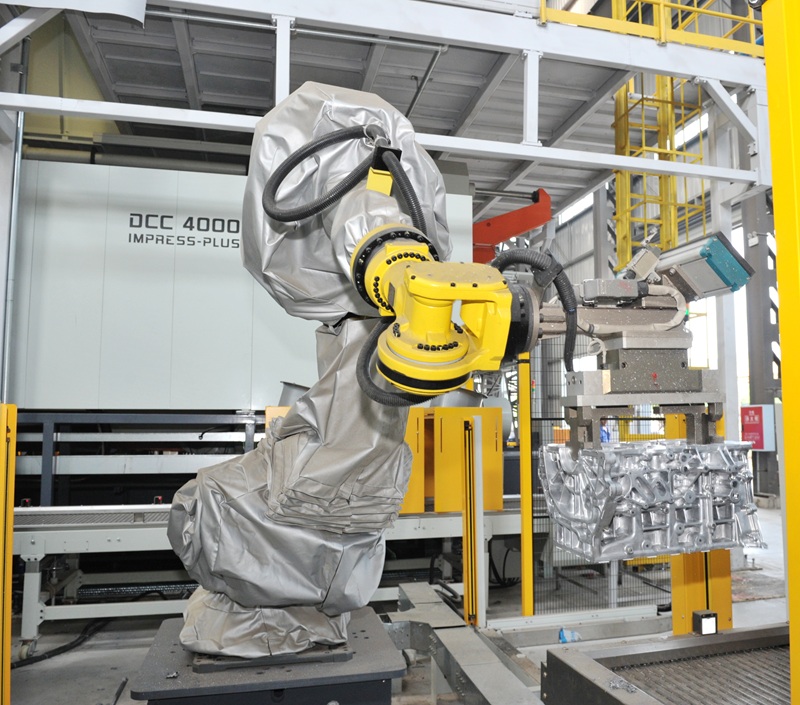
First, let’s clarify the core definitions:* Conventional casting = “allowing the molten metal to flow into the mold naturally” – relying on the gravity of the molten metal itself, it naturally fills the sand mold, cools and solidifies to form the final product. The process is simple and the operation is convenient, akin to “pouring cement to build a wall” without the need for additional pressure.* High-pressure casting = “injecting the molten metal into the mold under high pressure” – using the high pressure (tens to hundreds of MPa) provided by die-casting equipment, the molten metal is injected into the metal mold at a super high speed of 10-50 m/s, instantly cooling and forming. It is akin to “high-pressure water gun spraying and forming”, with extremely high efficiency and uniform forming.
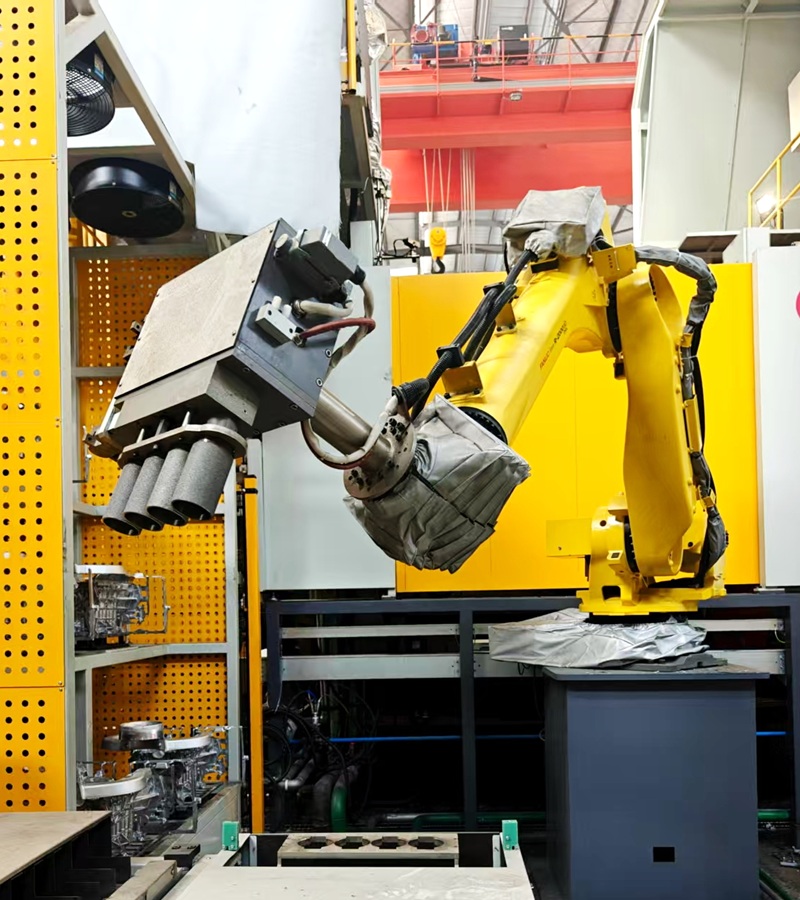
1. Molding Efficiency: Conventional casting has a long molding cycle, requiring 10-20 minutes for single-piece molding. Due to the influence of gravity, the filling speed is slow, making it suitable for small-batch, multi-variety production. High-pressure casting has an extremely fast molding speed, requiring only 0.5-10 seconds for a single piece. It allows for high-volume assembly line production, with daily output being 3-5 times that of conventional casting, making it suitable for large-scale mass production scenarios. For example, for engine blocks of the same specification, conventional casting can only produce 300-500 pieces per day, while high-pressure casting can produce 1000-1500 pieces per day, showing a significant efficiency gap.
2. Casting accuracy and appearance: Due to the influence of gravity, ordinary casting results in uneven filling of metal liquid, resulting in rough casting surfaces, prone to defects such as sand holes and shrinkage cavities, and low dimensional accuracy. Subsequent machining and grinding are required in large quantities to meet the usage standards. High-pressure casting achieves uniform molding, resulting in smooth casting surfaces with no obvious defects and high dimensional consistency. The amount of machining can be reduced by more than 60%, and the accuracy error can be controlled within ±0.05mm. It can be put into use without extensive grinding.
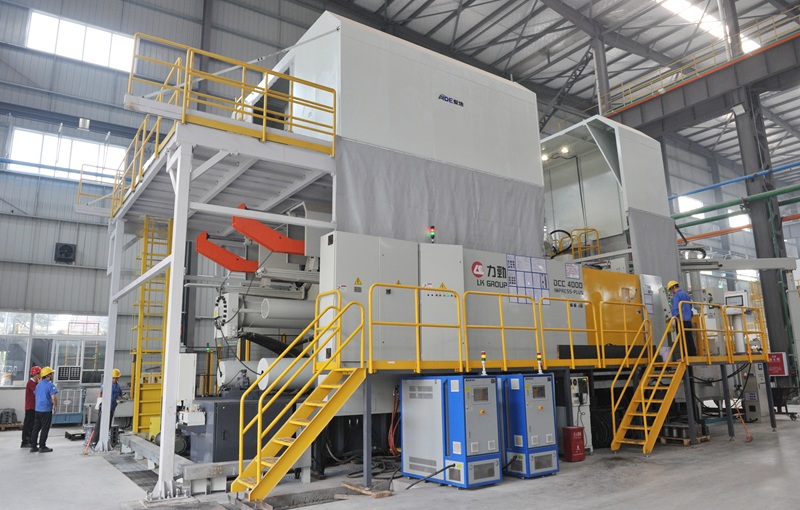
3. Casting Performance: Castings produced through conventional casting exhibit loose internal structures, containing defects such as porosity and shrinkage cavities. They possess limited load-bearing capacity, wear resistance, and corrosion resistance, making them suitable for the production of components with low performance requirements, such as ordinary brackets, housings, and basic connectors. Conversely, castings produced through high-pressure casting exhibit dense internal structures, high strength, excellent wear resistance, and strong sealing properties. They are ideal for the production of complex thin-walled, high-precision, and high-performance core components, such as engine blocks, transmission housings, and precision machinery core parts.
4. Cost and Applicable Scenarios: Ordinary casting equipment and molds require low investment and have a low initial threshold, but they have low production efficiency and high subsequent machining costs, making them suitable for small-batch, low-precision, and low-performance casting needs. High-pressure casting equipment and molds require higher investment and have a higher initial threshold, but they have lower unit costs for mass production and low subsequent processing costs, making them suitable for the production of core castings in large batches, with high precision and high performance. In the long run, they offer a cost advantage.
Zhengheng Power offers a comprehensive process matrix solution, boasting a complete casting process system: high-pressure casting; low-pressure casting; gravity casting; 3D printed sand mold: rapid prototyping and complex parts. We can provide the optimal one-stop solution based on batch size, structure, cost, and performance.
Post time: Feb-27-2026