

3D printing sand mold technology revolutionizes small-batch casting production
In the casting industry, small-batch, customized, and complex parts have always been pain points. Traditional sand casting requires mold making, with a set of molds costing tens of thousands and taking 15-30 days to complete. Moreover, once the mold is finalized, it cannot be modified. For small-batch orders ranging from dozens to hundreds of pieces, mold costs account for over 60%, leading to the situation where “small batches are not profitable and customized orders are not dared to be accepted”. The emergence of 3D printing sand mold technology has completely changed this situation.
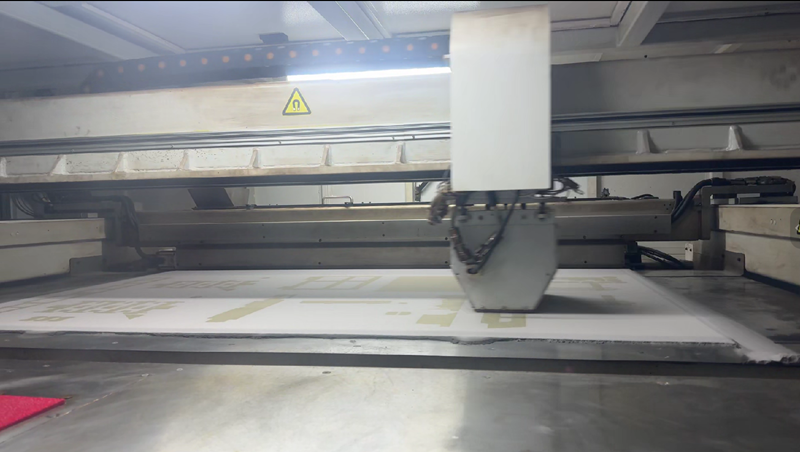
Key points of popular science: What is 3D printing sand mold technology? In layman’s terms, it is a technology that uses quartz sand as the main raw material and resin as the binder, and through the 3D printer, it sprays and solidifies layer by layer according to the design drawings, directly forming the sand mold. It eliminates the cumbersome processes of traditional mold making, mold repair, and mold removal, equivalent to “directly printing out the ‘mold shell’ of the casting”. Compared with traditional sand casting, its core advantages lie in “die-free, rapid, and high precision”, especially suitable for the production of small batches of complex structural castings. The specific disruptive logic is reflected in three core dimensions.
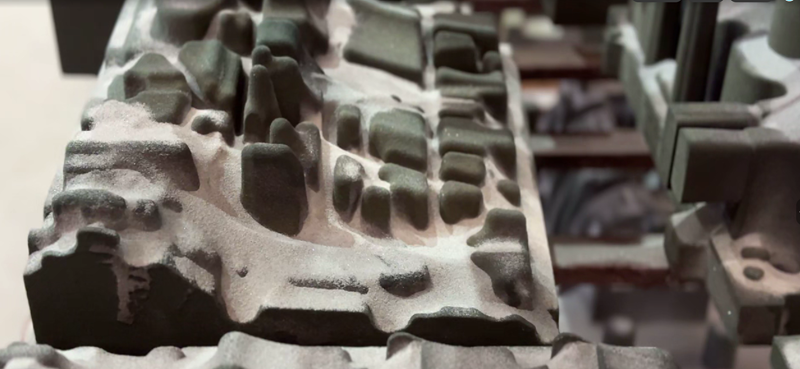
Disruption Point 1: Significantly reduce the threshold for small-batch production and break the “cost dilemma”. In traditional small-batch casting production, mold cost is the core burden. However, 3D printing sand molds eliminates the need to make traditional molds, directly printing sand molds based on design drawings. The cost of a single sand mold can be reduced by 30%-50%. Even for small-batch orders of dozens of pieces, reasonable profits can be achieved, completely solving the industry pain point of “small batches are not cost-effective” and enabling the implementation of customized and niche casting demands.
Disruption Point 2: Shortening R&D and production cycles to seize market opportunities. The traditional mold making cycle takes 15-30 days, and with trial casting and mold repair, the entire small batch production cycle can last up to 1-2 months. However, 3D printed sand molds can achieve “design on the same day, printing on the same day, and trial casting the next day”, shortening the overall production cycle by more than 70%. For scenarios such as new product development and emergency customization, sample iteration can be quickly completed, helping enterprises shorten the R&D cycle and seize market opportunities.
Disruption Point 3: Breaking through the limitations of complex structure formation and expanding the application scenarios of castings. Traditional sand casting is limited by molding processes, making it impossible to achieve integrated formation of complex internal channels, irregular structures, and thin-walled structures. Many complex castings require disassembly and subsequent assembly, which not only affects accuracy but also reduces structural strength. However, 3D printed sand molds can accurately reproduce any complex structure, whether it is the complex water jacket and oil passage of an engine cylinder block or the irregular structure of power components for low-altitude aircraft. They can be formed in one go, and the dimensional accuracy error can be controlled within ±0.05mm, expanding the application scenarios of castings.
Currently, Zhengheng Power has successfully applied 3D printed sand molds to small-batch production and new product development in fields such as engine components and precision machinery parts. This has achieved full process coverage from prototype development to small-batch trial production to large-scale production, freeing innovation from the constraints of traditional molds.
Post time: Feb-07-2026